

Last winter, a two-person design studio I work with lost its biggest client on a Tuesday morning. The email was polite, three sentences long, and mentioned "budget reallocation." By Friday the founders had laid off their one contractor, renegotiated their office lease, and discovered — mid-panic — that neither of them had the passwords to the company's project management account. The client leaving wasn't the crisis. The absence of any plan was.
That's the part most entrepreneurs skip. We build pitch decks, forecast cash flow, and obsess over customer acquisition, but we rarely sit down and ask: what happens when something actually breaks? A crisis management plan for entrepreneurs isn't a binder that collects dust — it's a short, blunt document that tells you what to do in the first hour, the first day, and the first week when the ground shifts.
What follows is what I've learned building these plans for small companies and, honestly, from the ones I built too late. You'll get the structure, the risk assessment work, the communication playbook, and the mistakes that cost me and others real money.
Key Takeaways
- A crisis plan is a one-page action document, not a corporate binder — if it takes more than ten minutes to find the right section, it's already failed.
- Business continuity planning for small business owners starts with a simple risk assessment template that ranks threats by likelihood and damage, not by how scary they sound.
- The first 60 minutes decide the outcome. Write a script for that hour before you need it.
- Crisis communication is a discipline: one spokesperson, one channel, one message, updated on a fixed schedule.
- Resilience planning for small companies is mostly about cash runway and redundancy — two things you can measure today.
- Test the plan once a quarter with a 20-minute drill. An untested plan is a wish.
Why most crisis plans fail before the crisis starts
I once sat in on a workshop where a founder proudly showed off a 47-page crisis management document. It had flowcharts. It had appendices. It had a section on "reputational risk vectors." When I asked him where the emergency contact for his server provider was, he flipped through it for four minutes and gave up.
That's the failure mode. Crisis plans get built to look thorough, not to be used. And they get built by people who've never actually been in a crisis, which means they optimize for completeness instead of speed.
What a crisis plan is not
It's not a business plan with a scary chapter. It's not a document for your investors. It's not a legal shield. The plan I'd defend with my life is two pages of contacts, triggers, and decisions that any team member could follow at 3 a.m. with shaking hands.
Here's the thing: in a real crisis, you don't read. You react. The plan exists to make your reflexes correct before you've had coffee.
The four crises that actually hit small companies
Most founders imagine a PR disaster. In my experience, the real list looks duller:
- Cash shock — a big client leaves, a payment bounces, a loan gets called
- Key person loss — a co-founder or critical employee quits, gets sick, or burns out
- Operational breakage — a supplier fails, a system goes down, a legal notice arrives
- Reputation hit — a public complaint, a data incident, a bad review that snowballs
Notice that three of the four are boring. That's the point. Your plan should spend most of its energy on the boring ones.
Building a risk assessment template for startups that actually works
Skip the enterprise risk matrix with nine columns. You need something you can fill in over a single afternoon and update in five minutes.

I use a stripped-down version: list every threat you can name, then score each on likelihood (1–5) and impact (1–5), multiply them, and sort. Anything scoring above 12 gets a written response plan. Anything below 6 goes on a watch list and gets reviewed quarterly.
A working risk assessment template for startups
Here's the actual structure I hand to founders, adapted from the same logic I use in risk management strategies for small business owners:
| Threat | Likelihood (1–5) | Impact (1–5) | Score | Owner | Response |
|---|---|---|---|---|---|
| Largest client (over a third of revenue) leaves | 3 | 5 | 15 | Founder | Cash runway calc + outreach list |
| Co-founder unavailable for 6 weeks | 2 | 5 | 10 | Both founders | Cross-training + documented handover |
| Hosting provider outage over 24h | 2 | 4 | 8 | Tech lead | Backup provider on standby |
| Data breach or credential leak | 2 | 5 | 10 | Founder | Incident runbook + insurer contact |
| Key supplier raises prices sharply | 4 | 3 | 12 | Ops | Second supplier mapped |
Two things to notice. First, the owner column — every threat has a name against it, not a department. Second, the response column is short enough to act on. If your response cell needs a paragraph, it's not a response, it's a plan for a plan.
How often should you update the risk assessment?
Quarterly, or whenever something material changes — a new big client, a new hire, a new market. I keep the file in the same folder as the cap table and the cash forecast, and I open it the first Monday of every quarter. Ten minutes. If nothing's changed, close it. If something has, you've just caught a problem early, which is the entire game.
The first-hour emergency response strategy for founders
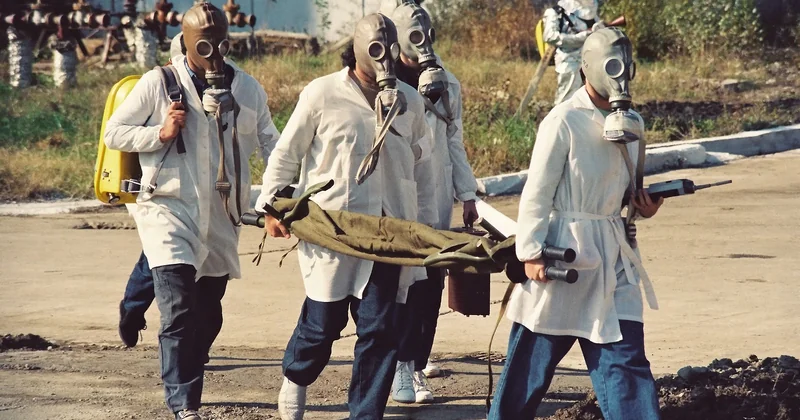
The first 60 minutes of a crisis are the only ones where you can change the trajectory. After that, you're managing consequences. So write the script now.
The triage script
When something hits, run these steps in order — no skipping:
- Stop and name it. Say out loud what's happening. "Our biggest client just cancelled." Naming it prevents the freeze response.
- Assess immediate harm. Is anyone hurt? Is money leaving the account right now? Is data exposed? If yes to any, that's the only thing you work on for the next hour.
- Call your two people. Not the whole team. Your co-founder and one trusted advisor. Three people can decide faster than five.
- Decide the next single action. Not the full plan. The next action. Usually it's a phone call or a message.
- Write down the time. Literally. "10:42 a.m. — client cancellation confirmed." This log becomes the backbone of everything you say to clients, staff, and insurers later.
The mistake I made early on was trying to solve everything at once — drafting the client email, updating the forecast, calling the lawyer, all in parallel. I ended up doing none of them well and burning the whole day. Serial, not parallel. One thing at a time, in priority order.
Who has authority to decide?
Write this down explicitly: who can commit the company to what, without asking. Can your ops lead spend up to a certain amount on emergency fixes? Can your co-founder send a public statement without your sign-off? Ambiguity here is how small crises become big ones — two people making different promises to the same client.
Crisis communication plan for entrepreneurs: what to say and who says it
Silence is the most damaging thing you can offer in a crisis. People fill silence with worse stories than the truth. Your job is to say something true, early, and on a schedule.

The one-spokesperson rule
Pick one person to speak for the company. Everyone else refers inquiries to them. This is not about ego — it's about consistency. Two versions of the story, even slightly different, read as a cover-up.
For a small team, that person is usually the founder. Fine. Just make sure the rest of the team knows the line: "I'll put you in touch with [name], who's handling this." Write that sentence into the plan.
A message template you can fill in under pressure
Have this pre-written with blanks:
- What happened — one plain sentence, no jargon
- What we're doing about it — the specific action, not "we take this seriously"
- What it means for you — the reader's actual exposure, stated honestly
- When you'll hear from us next — a real time, and then keep it
That last point is the one founders forget. Promising an update and then missing it does more damage than the original problem. If you say "by 5 p.m. tomorrow," set an alarm.
For tech-heavy companies, the same discipline applies to incidents that touch customer data or infrastructure — worth reading alongside risk strategies for technology entrepreneurs, where the communication stakes are higher because the blast radius is wider.
Business continuity planning and the money question
Here's the uncomfortable truth: most crises become existential because of cash, not because of the event itself. A lost client is survivable. A lost client plus no runway is not.
Runway math you should do today
Open your cash forecast and answer one question: if revenue dropped sharply tomorrow, how many weeks could you operate? Not months. Weeks. That number — whatever it is — tells you how much time you have to react. If it's under eight weeks, your crisis plan needs a cash section before anything else.
If you're not sure how to build that forecast, the mechanics are covered in cash flow forecasting for growing enterprises. The short version: know your fixed monthly burn, know your committed receivables, and know which costs you can pause within a week.
Redundancy: the boring superpower
Resilience planning for small companies comes down to having a second option for everything that matters:
- A second supplier for your critical input
- A second person who can do each critical task
- Credentials stored somewhere a second person can reach
- A backup of your data, tested, not just scheduled
That last one bit me personally. I had nightly backups running for two years and never once tried to restore one. When I finally did, during a routine check, the restore failed — the backup was writing to a path that had been renamed months earlier. Two years of "backups" that were effectively empty. I'll admit, I had no idea what I was doing when I set it up, and I paid for that ignorance in a very long weekend.
How to test and keep the plan alive
An untested plan is a document, not a capability. Test it.
The 20-minute drill
Once a quarter, pick one threat from your risk assessment. Set a timer for 20 minutes. Then walk through: who do we call first, what do we say, what's the first decision, who has authority. You don't need to actually simulate the crisis — you need to discover where the plan is vague. It always is, somewhere.
The first drill I ran revealed that my "emergency contacts" list had a supplier phone number that had been disconnected for over a year. Twenty minutes of testing saved me from discovering that at the worst possible moment.
Keep it short enough to survive
Every quarter, the plan gets shorter. Not because I'm cutting corners, but because testing reveals what's actually needed. The version I trust most is one page: contacts, triggers, the first-hour script, the communication template, and the runway number. Everything else lives in linked documents you can open if you need them.
The plan you write this week beats the perfect one you never finish
You don't need a consultant or a 40-page template. You need a document that fits on a page and a willingness to look at the uncomfortable stuff — the client you can't afford to lose, the person whose absence would break you, the number in your bank account that tells you how much time you'd have.
Here's your next action, and I mean today: open a blank document and write the first-hour script. Five steps, in order, with names next to each. That single page is worth more than any binder. Then, this week, add the risk table and the runway number. That's it. You've built a crisis management plan for entrepreneurs that actually works — because you can find it, read it, and use it when your hands are shaking.
The crisis will come whether you're ready or not. The only question is whether you'll be improvising or following a script you wrote when you were calm.
Frequently Asked Questions
How long should a crisis management plan be for a small business?
One to two pages for the core plan, with linked supporting documents for detail. If your team can't find the right section in under a minute during a real emergency, the plan is too long. Prioritize the first-hour script, contacts, the communication template, and your runway number — everything else is secondary.
What's the difference between a crisis management plan and a business continuity plan?
Crisis management is about the immediate response — what you do in the first hours and days to contain the damage. Business continuity planning is about keeping operations running through and after the event: backup suppliers, cross-trained staff, data recovery, cash runway. You need both, but start with the crisis response because it's what you'll reach for first.
Do I need a lawyer or consultant to build one?
Not necessarily. The core document can be built by the founders in an afternoon. Where a professional helps is in specific areas: legal exposure, insurance coverage, and regulated incidents like data breaches. Get professional input on those sections, but don't wait for a consultant to write the whole thing — the delay is the real risk.
How often should I review the plan?
Quarterly, at minimum, plus immediately after any material change — a new large client, a key hire or departure, a new market. Run a 20-minute drill each quarter using one threat from your risk assessment. The drill is what keeps the plan honest; without it, contacts go stale and assumptions go untested.
What if I'm a solo founder with no team?
Your plan looks different but the logic is the same. Your "second person" is an external advisor, a mentor, or a trusted peer you can call in the first hour. Your redundancy is documented processes and a backup of everything in a place you can reach from anywhere. And your runway number matters even more, because there's no one else to absorb the shock.


